
Marriage Law Reform 2026: Could celebrants legally marry couples in England and Wales?
If you’ve seen headlines about the new marriage law reforms in 2026 and wondered whether this means celebrants can finally legally marry couples in England and Wales, the short answer is: not yet, but we are closer than we have ever been, and we need your input.
I’m Zadie, a UK wedding celebrant trained by Humanists UK, and this is a subject I care about deeply.
I work with couples who have chosen a completely personal celebrant ceremony for their wedding day, but who currentlyhave to complete the legal part of their marriage separately, or pay for both a registrar and a celebrant to attend on the same day.
And when you’re standing at the front watching a couple make some of the biggest promises of their lives, with all their favourite people there to witness it, it feels pretty outdated that this can be their wedding in every meaningful sense, but not the moment they legally become married.
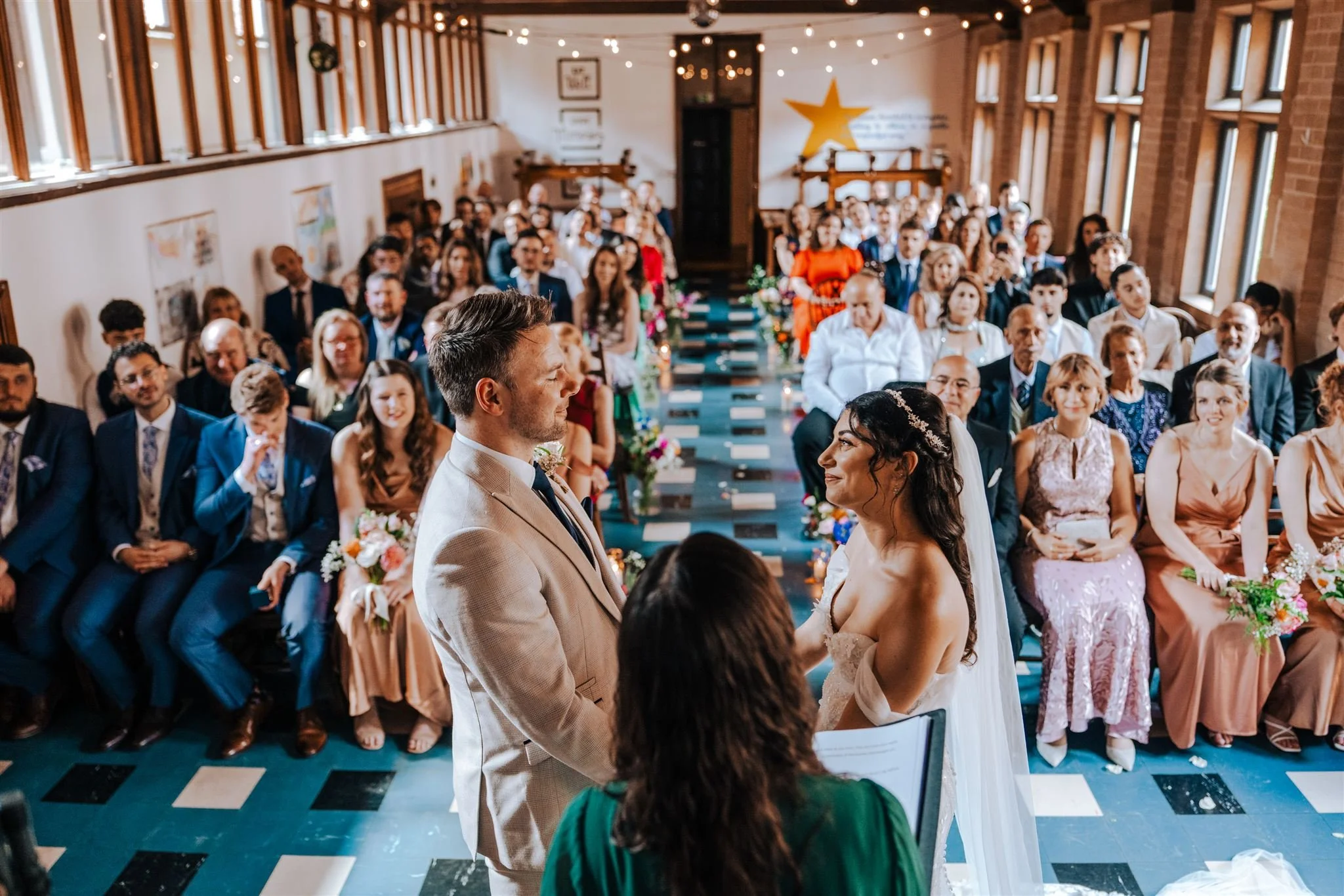
So, when the Government launched its long-awaited consultation on marriage law reform in July 2026, I was VERY excited and determined to demystify it, so that couples like you can fully understand what is happening and how you can have a say.
I’ve since spoken to BBC News about the proposed changes, been invited to discuss them with the UK Wedding Association by Alison Hargreaves from Guides for Brides, and talked about the future of weddings on Becca Pountney’s podcast.
But if you’re planning a wedding, you probably have a much more important question: “What does any of this actually mean for me?”
So, let’s get into it and answer some of your questions!
Can a celebrant legally marry you in England and Wales?
As of right now, no. A Humanist or independent wedding celebrant cannot legally marry you in England and Wales. You can still have a celebrant conduct your wedding ceremony exactly as you want it and where you want it, but the legal marriage currently needs to happen separately, usually at a register office or as part of a registrar-led ceremony at an approved and licensed venue.
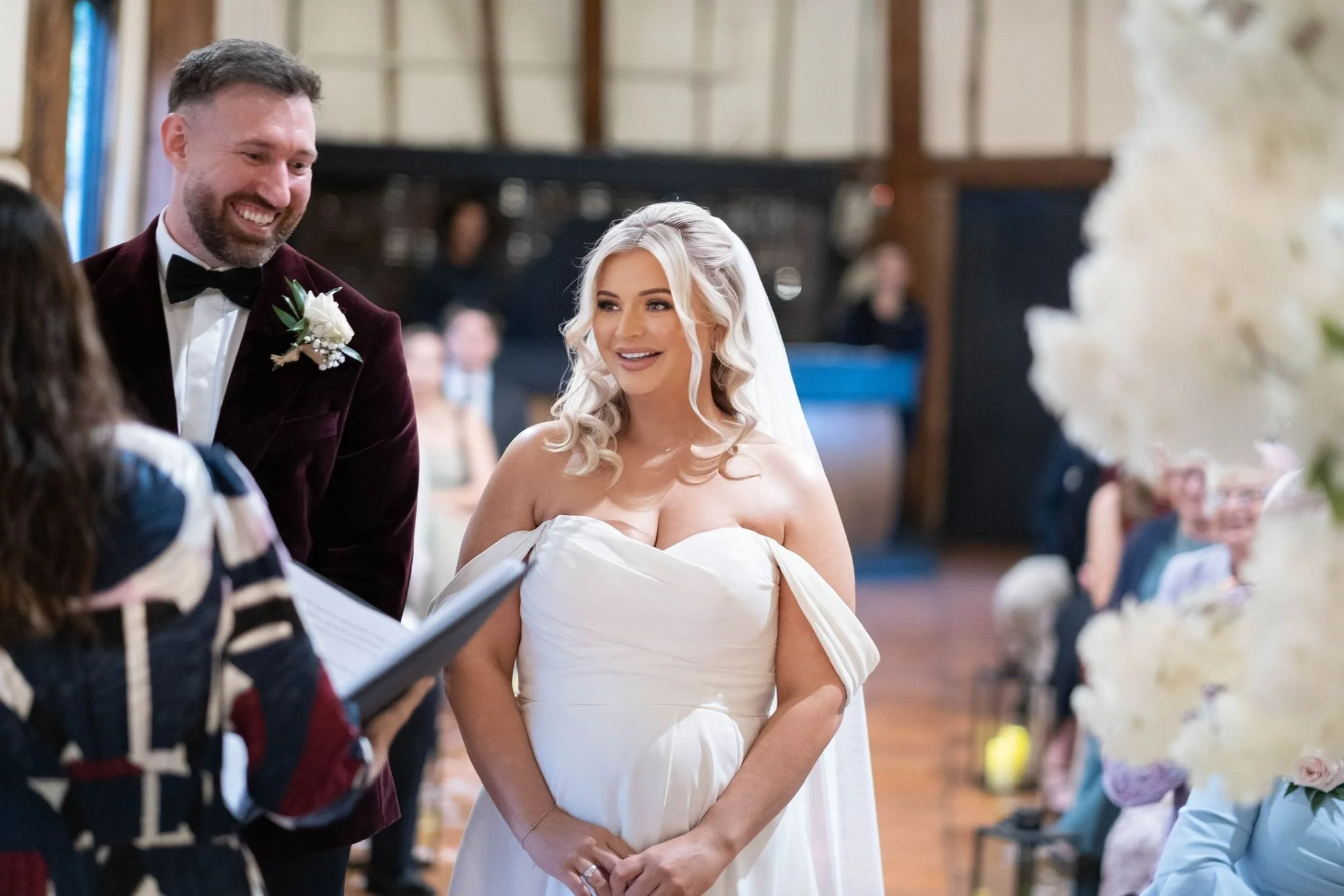
Photo courtesy of photographer no longer
Most of my couples choose to do the basic legal formalities at a register office before or after their wedding day, then save the personal vows, rings and all the meaningful bits for their celebrant ceremony. If you ask for what's known as a statutory ceremony, the set fee for the registrar at a register office is currently £62. This is the basic legal ceremony rather than the more elaborate ceremony packages councils also offer.
But this is where the proposed Marriage Law Reform gets VERY interesting. The Government is looking to move away from a system that largely regulates where you can legally marry towards one focused on who is authorised to marry you. As part of that, it's consulting on whether suitably qualified and regulated non-religious celebrants/officiants could become authorised to conduct legal marriages.
So, despite some of the headlines you might have seen, the law hasn't changed yet and there is no date when celebrants will be able to legally marry couples in England and Wales. The Government has committed to enabling non-religious belief organisations, including Humanists, to conduct legally binding weddings as part of the reforms, while the route for independent celebrants is still being consulted on.
So there's still a way to go, but this is a pretty big deal.
What is the 2026 Marriage Law Reform consultation?
The basic structure of wedding law in England and Wales has remained largely the same for almost 200 years. Weddings and couples, however, have changed quite a bit since then!
The other problem is that the current system treats different types of weddings differently, with separate rules around where they can happen, who can conduct them and what can be included. The only legal option for people who want a non-religious ceremony is a civil registrar-led ceremony, so their choice of a celebrant-led ceremony cannot be legally recognised under current law. Basically, the way people get married has moved on, but much of the law hasn't moved with it.
The Law Commission reviewed the whole system and concluded in 2022 that wedding law is “inconsistent and complicated, inefficient, unfair, and needlessly restrictive”, recommending major changes to give couples more choice over where and how they get married.

Excerpt from The Law Commission’s Recommendations Report
In July 2026, the Government launched Tying the Knot: Reforming Weddings Law in England and Wales. Despite the rather formal name, it's essentially the Government asking: if we're going to change the way weddings work, what should the new system actually look like and what do you think to these ideas we’re proposing?
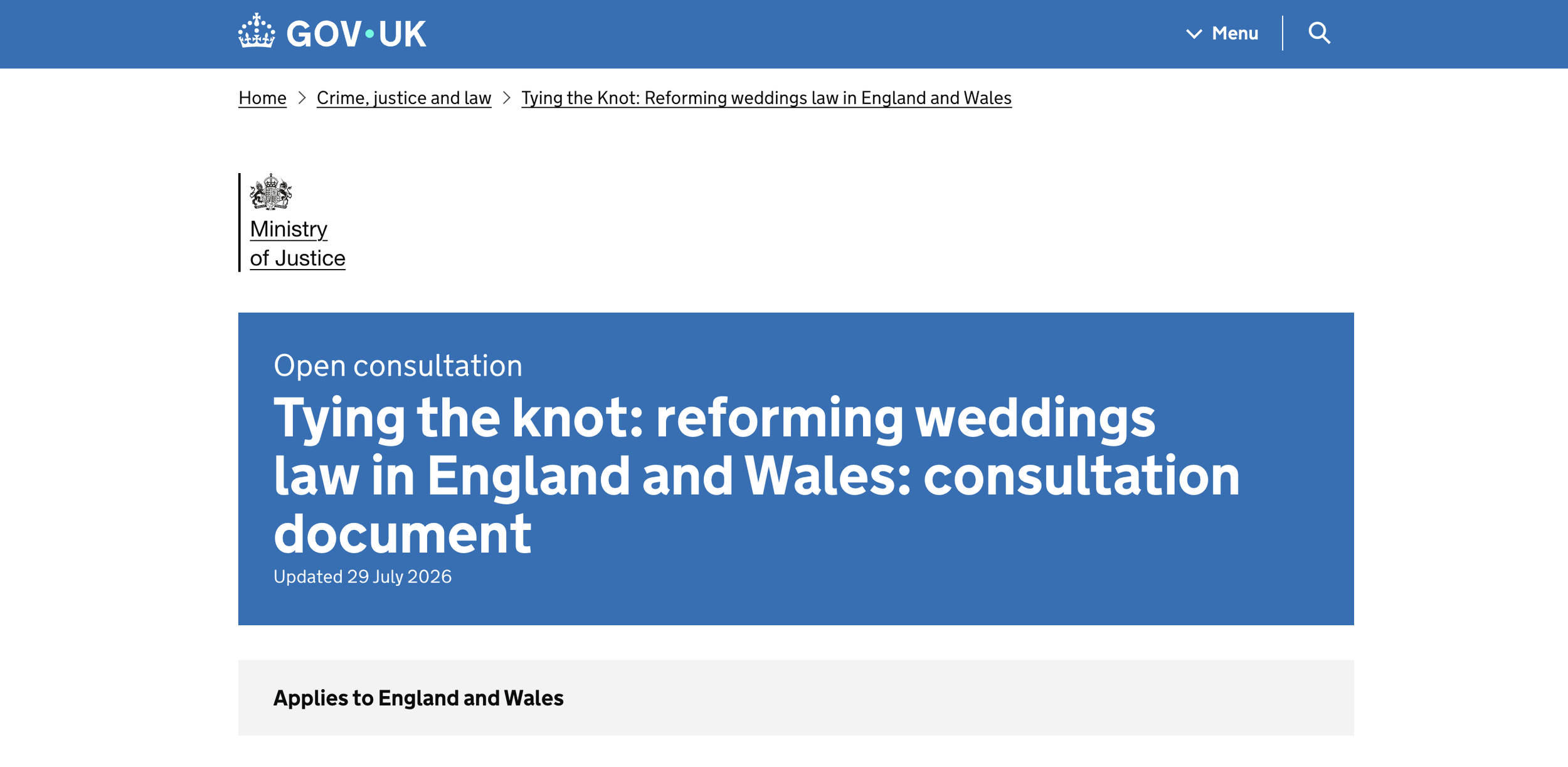
Government’s consultation on wedding law reform webpage
They want to hear from the people it will affect. That means couples, celebrants, wedding suppliers, religious and non-religious groups and the wider public. This bit is really important: the law hasn't changed yet. This consultation is our opportunity to help shape what it could become. It's open until 24 September 2026, so there is still time to have your say. I'll show you exactly how to do that later, but first, let's look at what could actually change.
What marriage law changes are being proposed?
Okay, so what could actually change?
The biggest shift is surprisingly simple. Instead of the law being mainly concerned with WHERE you get married, the focus would move to WHO is responsible for legally marrying you. At the moment, we have what's called a “buildings-based” system. The proposals would move us towards an “officiant-based” system instead. Sounds a bit dry, I know, but this one change could give couples a LOT more choice over what their wedding actually looks and feels like.
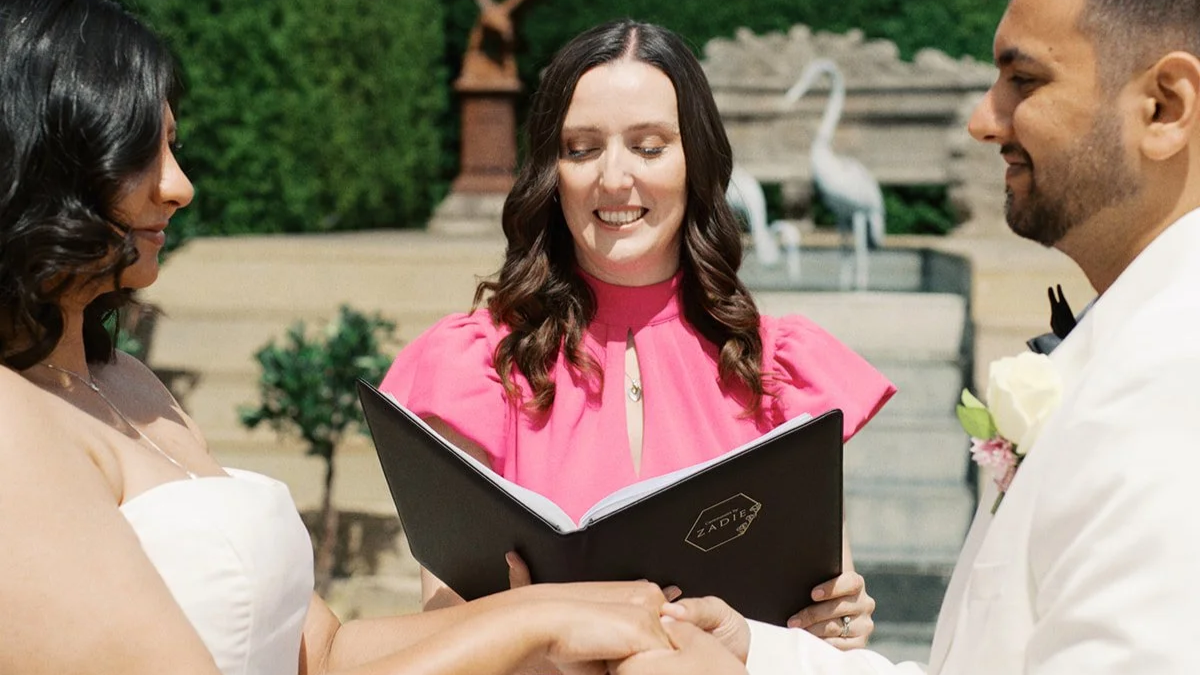
Image courtesy of Sorci LedyukovaPhotography
Here are some of the big things being proposed:
You could have a lot more choice over where you legally get married.
Your legal ceremony wouldn't necessarily need to be tied to a register office, approved venue or particular place of worship. Instead, the officiant would be responsible for making sure the location is suitable. So that woodland, family garden or field you've always imagined would then be a possibility! There would still be rules around whether a location is suitable and maintains the dignity of the occasion, so this isn't quite a get legally married absolutely anywhere you fancy situation, but it opens up a lot more options.
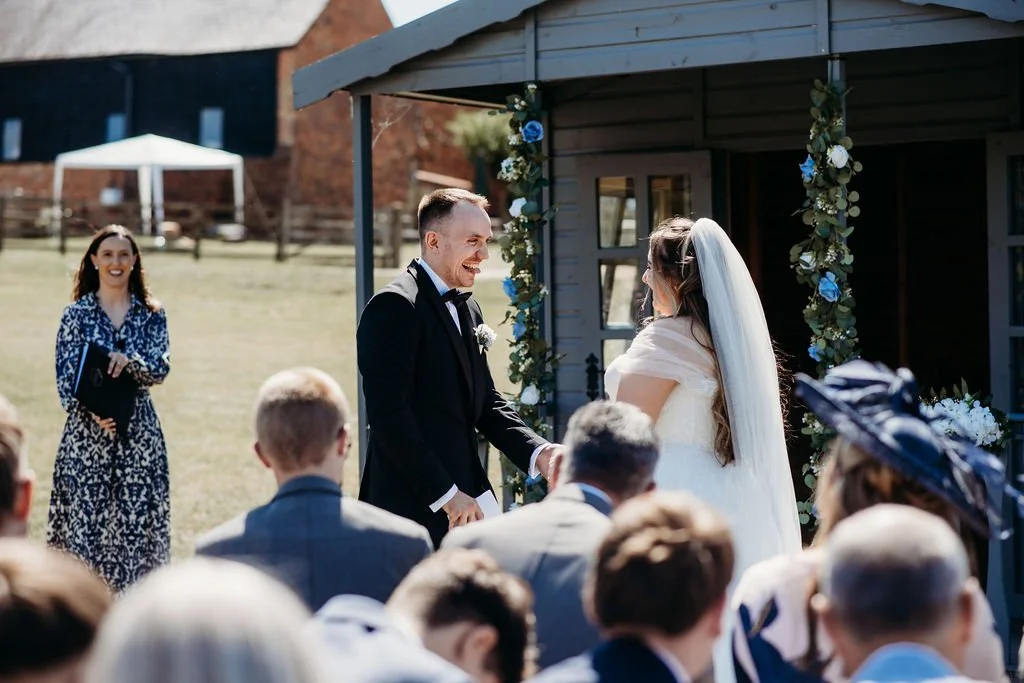
Image courtesy of Sarah J Scott Photography
Humanist weddings are set to become legally recognised in England and Wales.
This is a big one. Humanist marriages are already legally recognised in Scotland and Northern Ireland, but not in England and Wales. The Government has committed to legally recognising Humanist marriages here too as part of its wider reforms to wedding law. Under the proposed system, qualifying non-religious belief organisations, such as Humanists UK, would be able to nominate suitably qualified celebrants/officiants to conduct legal marriages. So couples choosing a Humanist wedding could finally have the ceremony that means something to them be the moment they legally become married as well!
Independent celebrants could potentially be able to legally marry couples too.
This is where things are less certain. The Government is also proposing a route for independent celebrants to conduct legal marriages, but exactly how this would work is still being consulted on.
Unlike Humanist celebrants, who have an established organisation such as Humanists UK that can train, accredit and provide ongoing oversight of its celebrants, independent celebrants don't currently have one equivalent organisation representing and overseeing everyone. So one of the big questions is who would take responsibility for authorising, managing and monitoring independent celebrants as legal officiants.
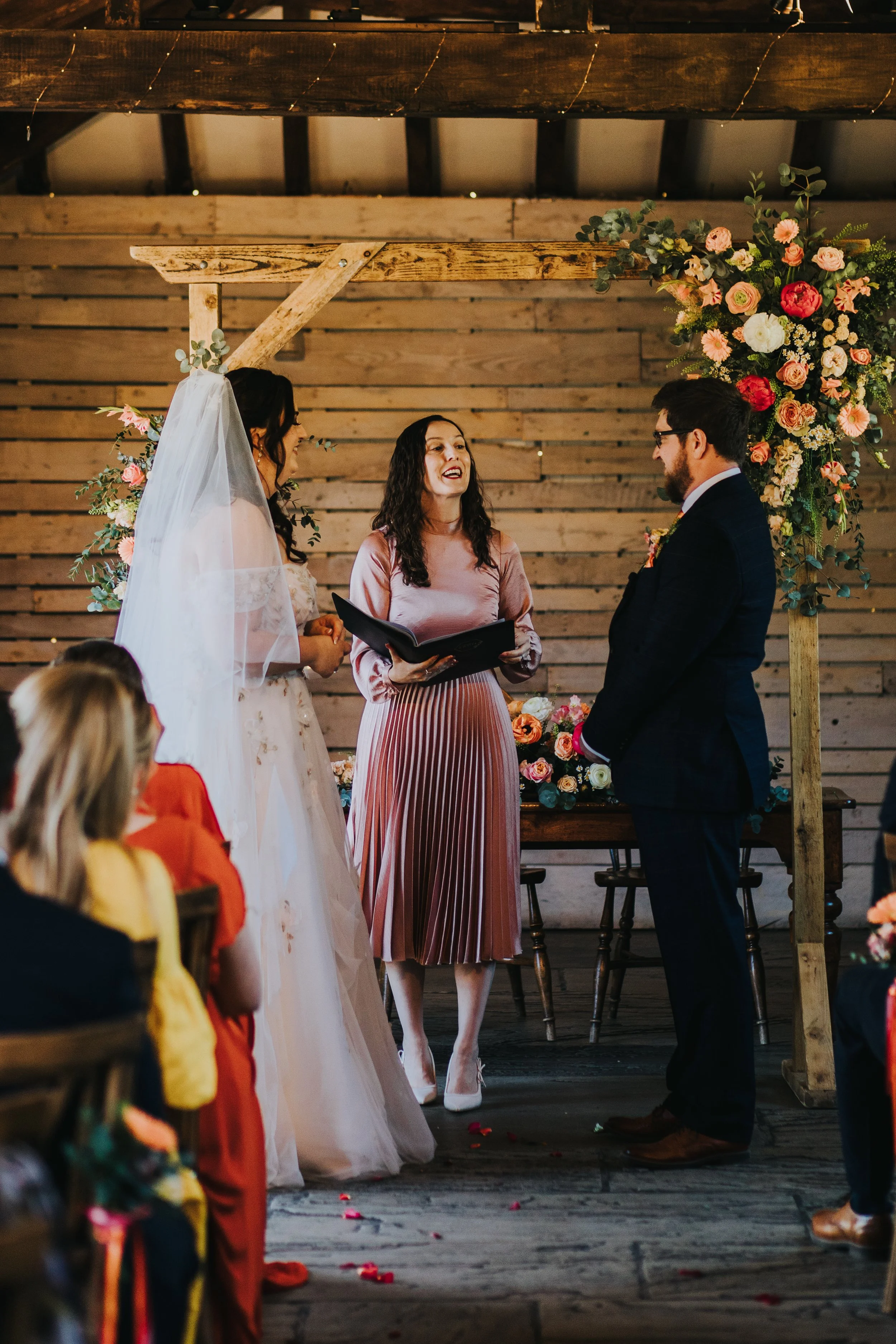
Photo courtesy of Sophie Ann Photography
Personally, I really hope a workable route is found. There are fantastic, highly trained independent celebrants out there who I believe should absolutely have the opportunity to become legal officiants too. Ultimately, this reform should be about giving couples more choice.
You could have more freedom over what actually happens in your ceremony.
There are proposals to give couples more flexibility over how they express their consent to marry, rather than having to use the specific standard legal wording currently required in civil ceremonies. The reforms are also looking at the rules around religious and non-religious content, which could give couples more freedom to create something that actually reflects their beliefs, cultures and families. This could be particularly meaningful for mixed-faith or mixed-belief couples who currently have to fit within a system that doesn't necessarily reflect the two of them as a couple.
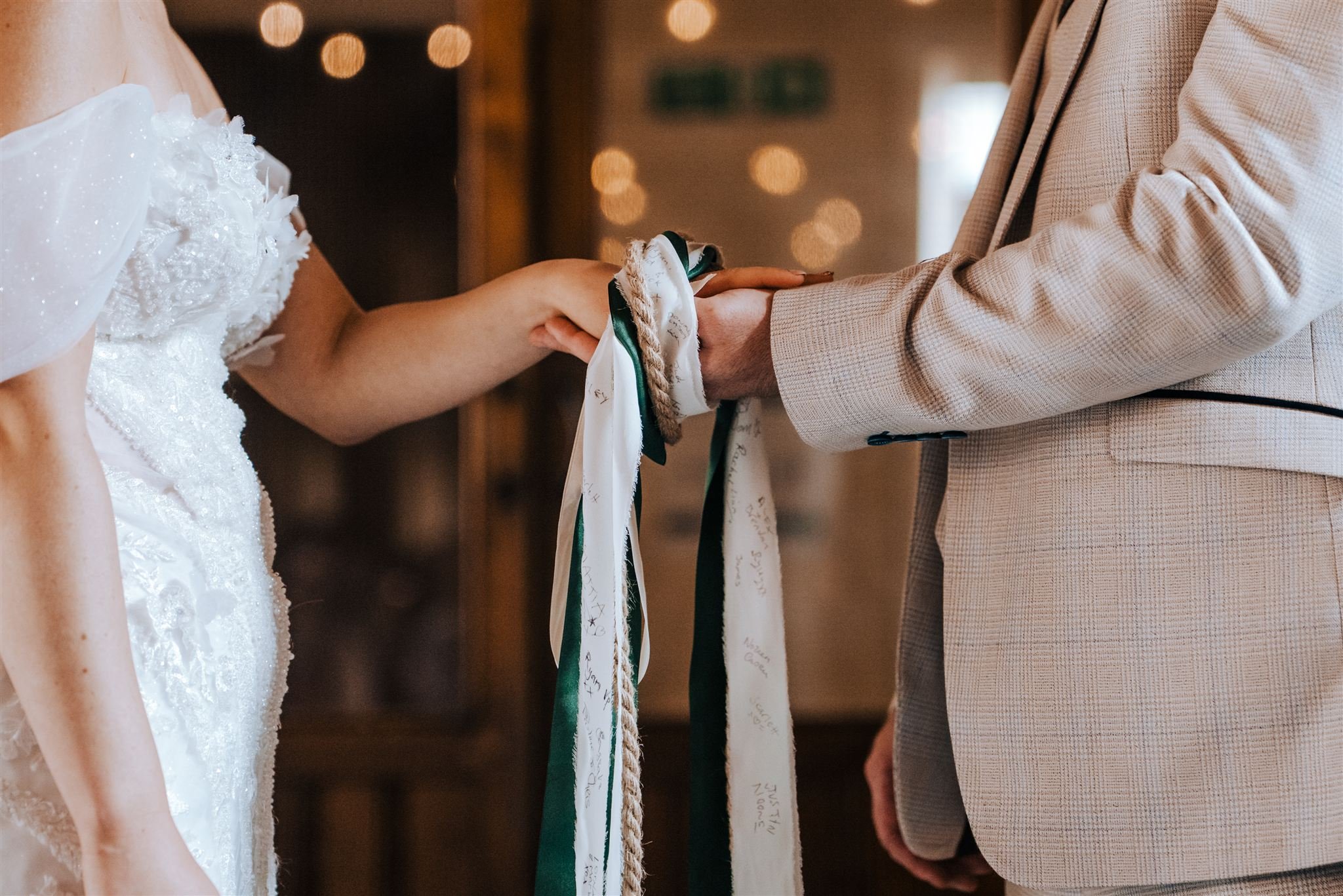
Photo courtesy of Alex Buckland Photography
So when you strip away all the legal terminology, this is really about giving couples more choice over where they get married, who marries them and what that moment looks and feels like.
There would absolutely still be rules and safeguards. Marriage is a serious legal commitment and nobody is suggesting otherwise. But the idea is that protecting the importance of marriage shouldn't necessarily mean every couple has to make that commitment in the same limited ways.
And remember, none of this is law yet. These are the proposals we're being asked to have our say on.
Why does Marriage Law Reform actually matter for couples?
For me, this is the whole point of the reform - choice.
I work with couples who have already decided that their celebrant ceremony is their wedding. That’s the date they’ll celebrate as their anniversary, the ceremony all their favourite people are invited to and the moment they actually feel like they’re getting married.
For many of them, the legal ceremony is something they quietly do at the register office beforehand because, well, they have to if they want to be legally recognised as married.
From my experience, there tend to be two schools of thought when it comes to the legal ceremony:
It’s an admin task to tick off the wedding planning spreadsheet. These couples turn up in casual clothes, grab two witnesses, say the words they need to say and save everything that feels important to them like rings, vows and music for their wedding day.
It’s another excuse to celebrate! Two happy days, two outfits, maybe an intimate lunch or get-together with close family and friends before the bigger wedding day celebrations. Why not?!
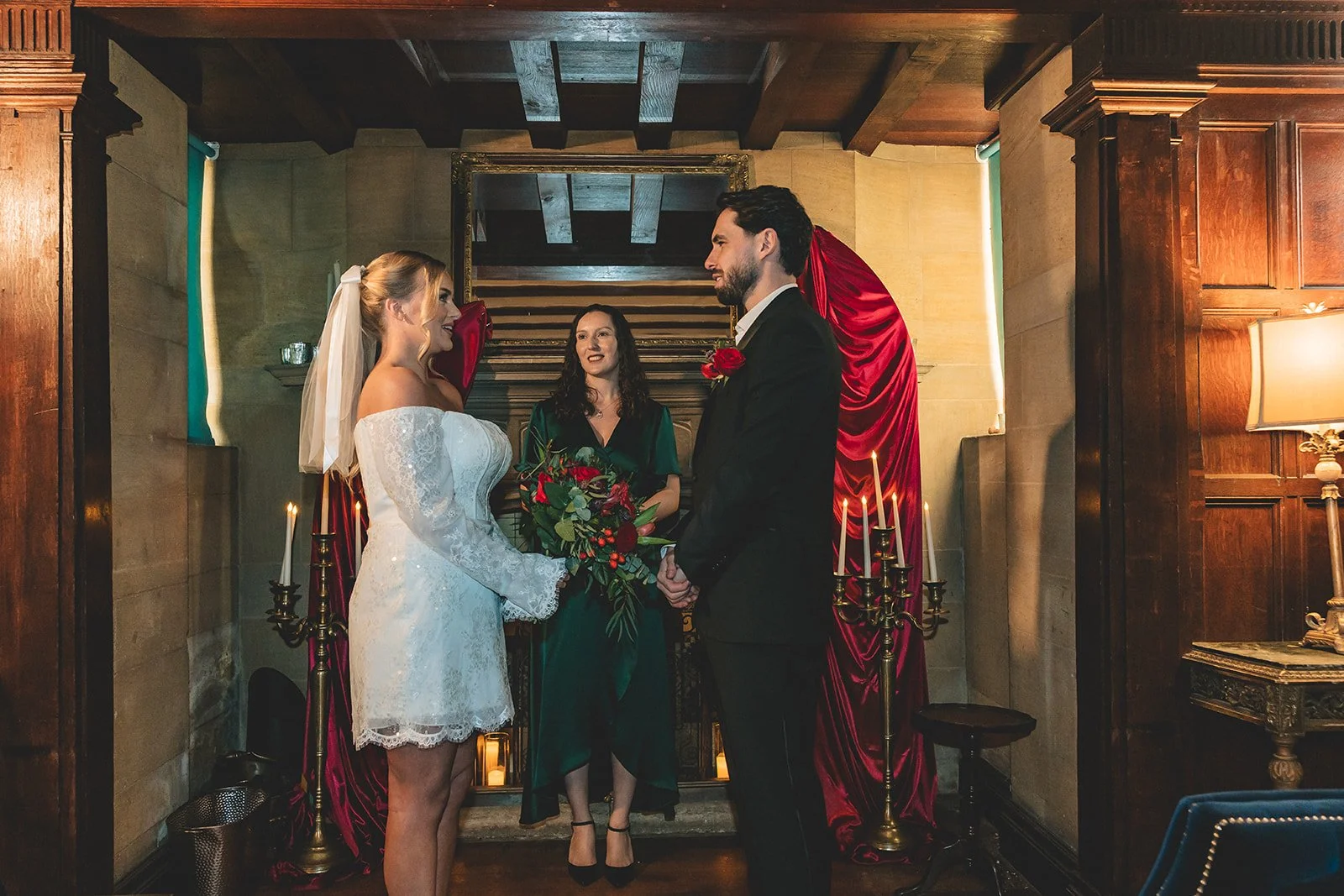
Photo courtesy of Steve Mulvey Photography
Either way, these couples see nothing wrong with doing the legal bit separately and are perfectly happy with separating it in the name of having the meaningful celebration on their wedding day that is completely personal to them.
And actually, I’ve had couples tell me they preferred doing it separately. Knowing the formal bit was already done meant they felt less nervous walking into their celebrant ceremony. There was nothing they had to say or get “right”. They could just be completely present and enjoy it.
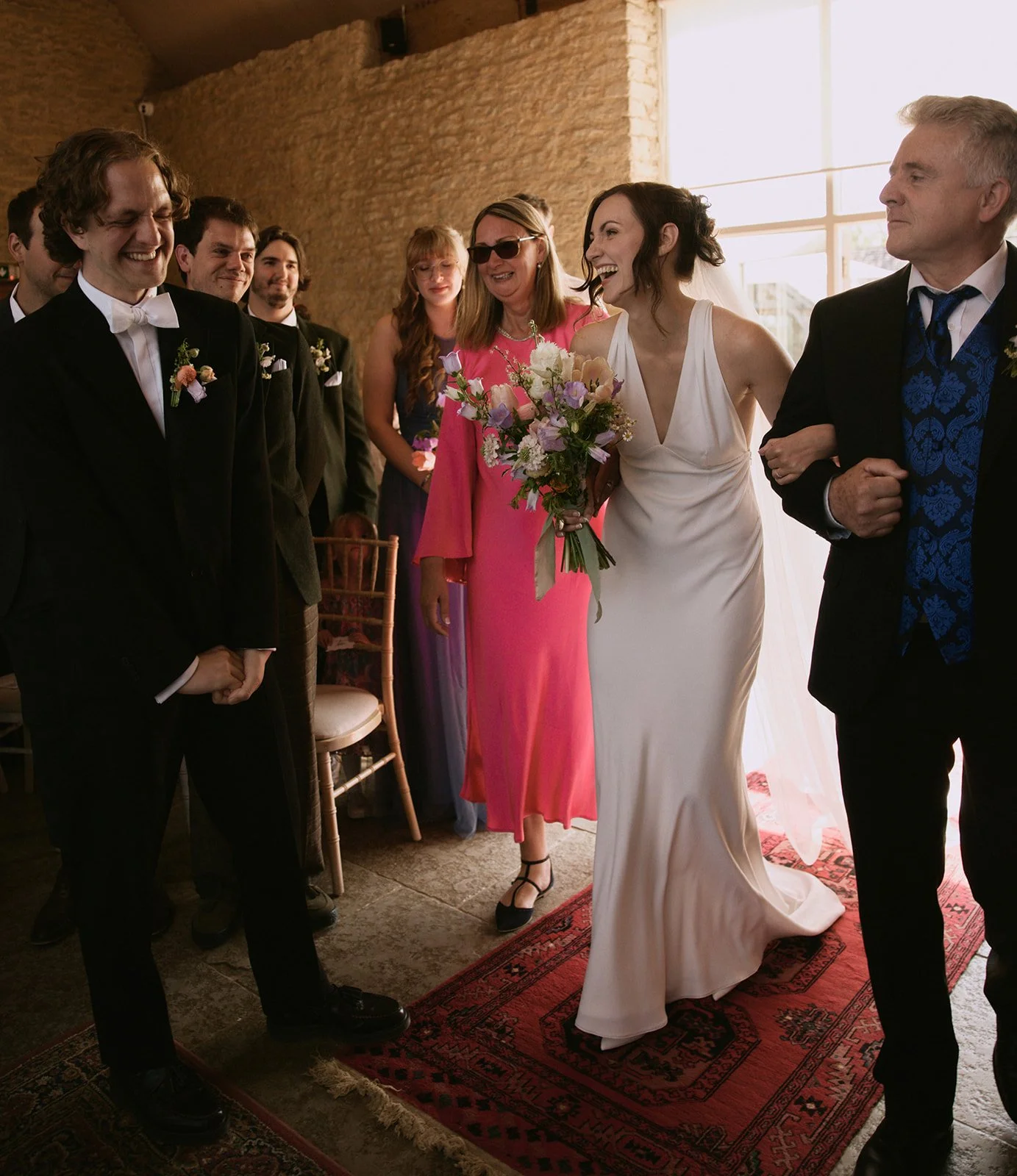
Photo courtesy of Nineteen Ninety Photography
So I’m certainly not arguing that separating the legal ceremony is a bad thing. For some couples, it works brilliantly. But surely the important question should be: do they want to?
Because for other couples, separating the two doesn't feel right. If the ceremony where you make the promises that actually mean something to you, in a place you’ve chosen, with someone you trust to tell your story is the moment that feels like your wedding, why shouldn’t there be a route for that to be the moment you legally get married too?
It could also make a huge difference for couples who don’t fit neatly into the choices the current system gives them. Maybe you have different beliefs or cultures that you want represented. Maybe neither of you is religious but a standard civil ceremony doesn’t feel like you either. Maybe there’s somewhere incredibly meaningful to you that just happens not to be an approved wedding venue.
And importantly, reform doesn’t mean everyone suddenly has to have a celebrant wedding in the middle of a forest! If a church wedding or registrar ceremony is completely your thing, brilliant. Those choices aren't going anywhere.
This is about giving other couples more choice too. Because I really don’t buy the argument that giving people more freedom over how they get married somehow makes marriage itself less meaningful. In fact, I’d argue the opposite.
And funnily enough, that’s exactly what I ended up discussing with BBC News…
I spoke to BBC News about why modern relationships deserve modern ceremonies
Not long after the consultation launched, I was invited to speak to BBC News about the proposed reforms and, rather brilliantly, the article also featured one of my own couples, Sam and Courtney. They’re a perfect real-life example of exactly what I’ve been talking about and the strange disconnect the current law can create.
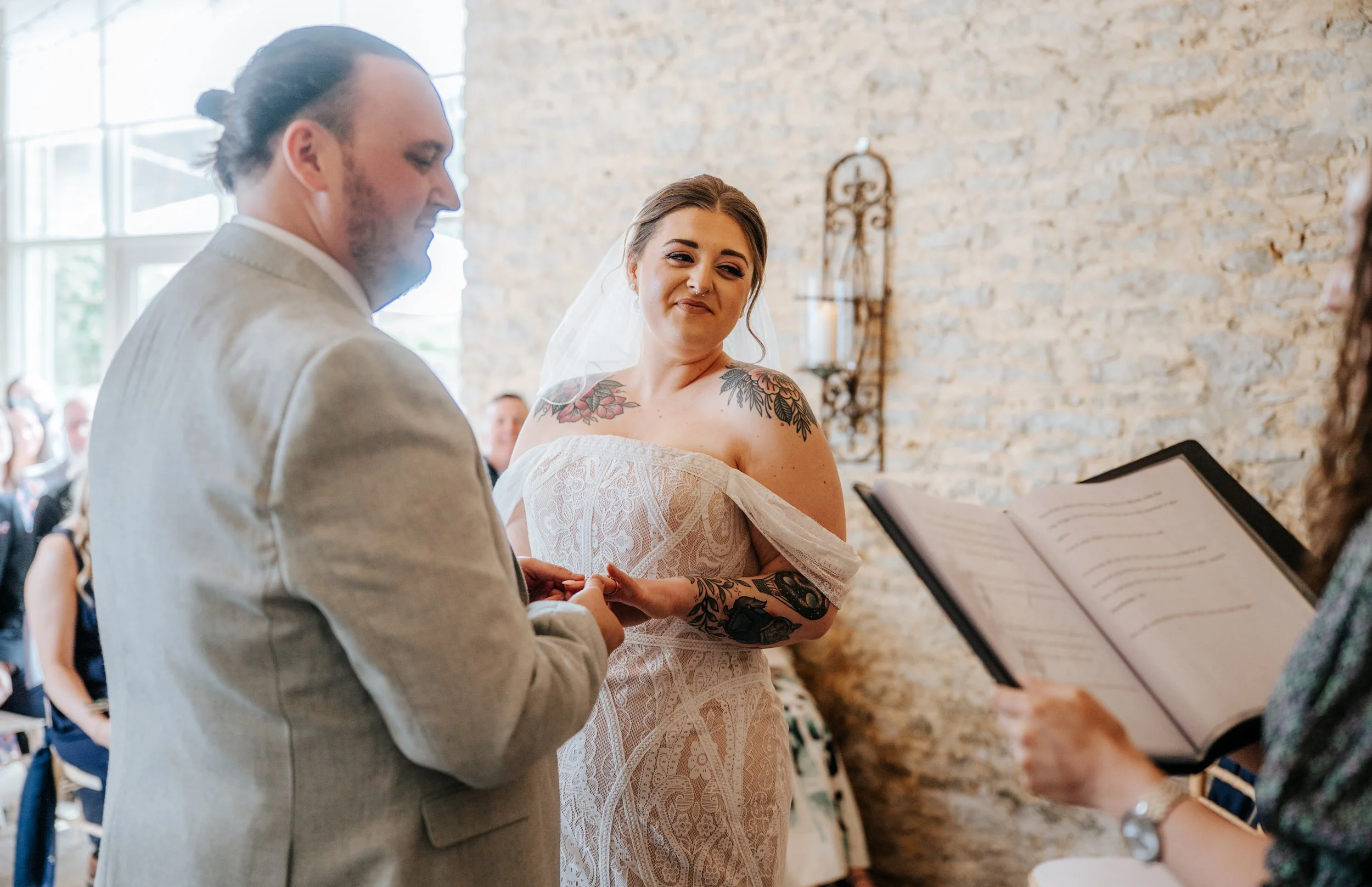
Photo courtesy of KJA photography
Courtney told the BBC that they made their legal ceremony “as insignificant as possible” because, to them, it was simply something they needed to do to make their marriage legally binding. Then came the day they actually considered their wedding, surrounded by the people they loved, with a completely personal ceremony created around the two of them.
Just think about that for a second. The part of their wedding that carried the most legal significance was deliberately the part they made the least personally significant. And I think that gets right to the heart of why this reform matters.
The BBC article explored criticism that giving couples more freedom over their weddings could dilute the seriousness of marriage or make it more “frivolous”. But I think we're in danger of confusing serious with formal, and meaningful with traditional.
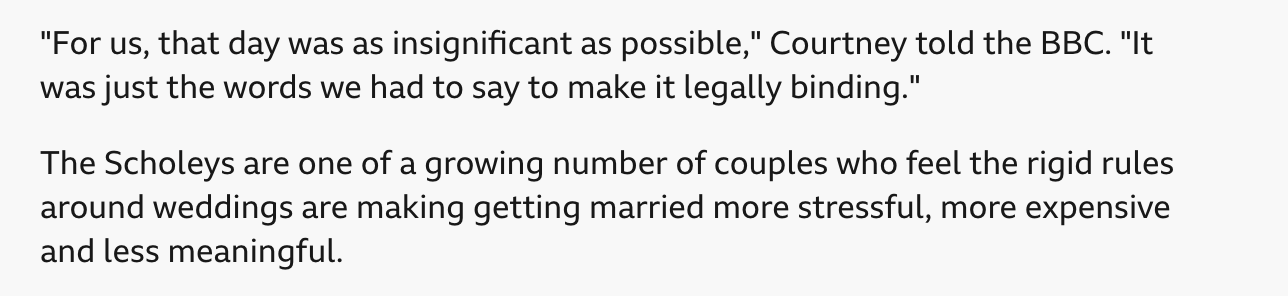
Excerpt from BBC News article: Long overdue, life-changing or frivolous? Your thoughts on wedding rule changes
A ceremony can have everyone laughing one minute and completely silent the next. It can include stories, cultural traditions, children, music or words that would never appear in a standard ceremony, and still carry the enormous weight of two people choosing to commit their lives to each other.
In fact, if we believe marriage is such a serious commitment, shouldn't we want the ceremony where that commitment is made to mean as much to the couple as possible?
As I told the BBC:
“How can you ask someone to make a serious commitment in words that mean nothing to them and ways that are meaningless to them?”
And this isn't about replacing traditional weddings. If the traditions already available feel meaningful to you, brilliant. But modern couples don't all share the same beliefs, cultures, family structures or ideas about what marriage looks like.
Giving them more ways to make that commitment doesn't weaken marriage. It gives more couples the opportunity to make it in a way they truly understand, believe in and mean. Or, as I summed it up to the BBC:
“Modern relationships deserve modern ceremonies.”
Taking the Marriage Law Reform conversation to the wedding industry
I haven't suddenly become passionate about Marriage Law Reform because there's now a consultation to talk about. I've been campaigning for change for a while, including writing to my own MP about why I believe our wedding laws need to catch up with the couples they're supposed to serve.
So when the consultation finally launched, I didn't want to just celebrate, cross my fingers and hope we ended up with the right outcome. This is the bit where we actually have an opportunity to influence what that outcome looks like.
And that doesn't just mean couples need to get involved. The people working with them every week have a responsibility to use their experience too.
Following a meeting with the Ministry of Justice policy team, the UK Wedding Association held an industry briefing to dig into the proposals and some of the big questions that still need answering. I was invited to join the expert panel alongside a venue owner, an independent celebrant and an accessibility specialist, with Alison Hargreaves from Guides for Brides chairing the discussion.
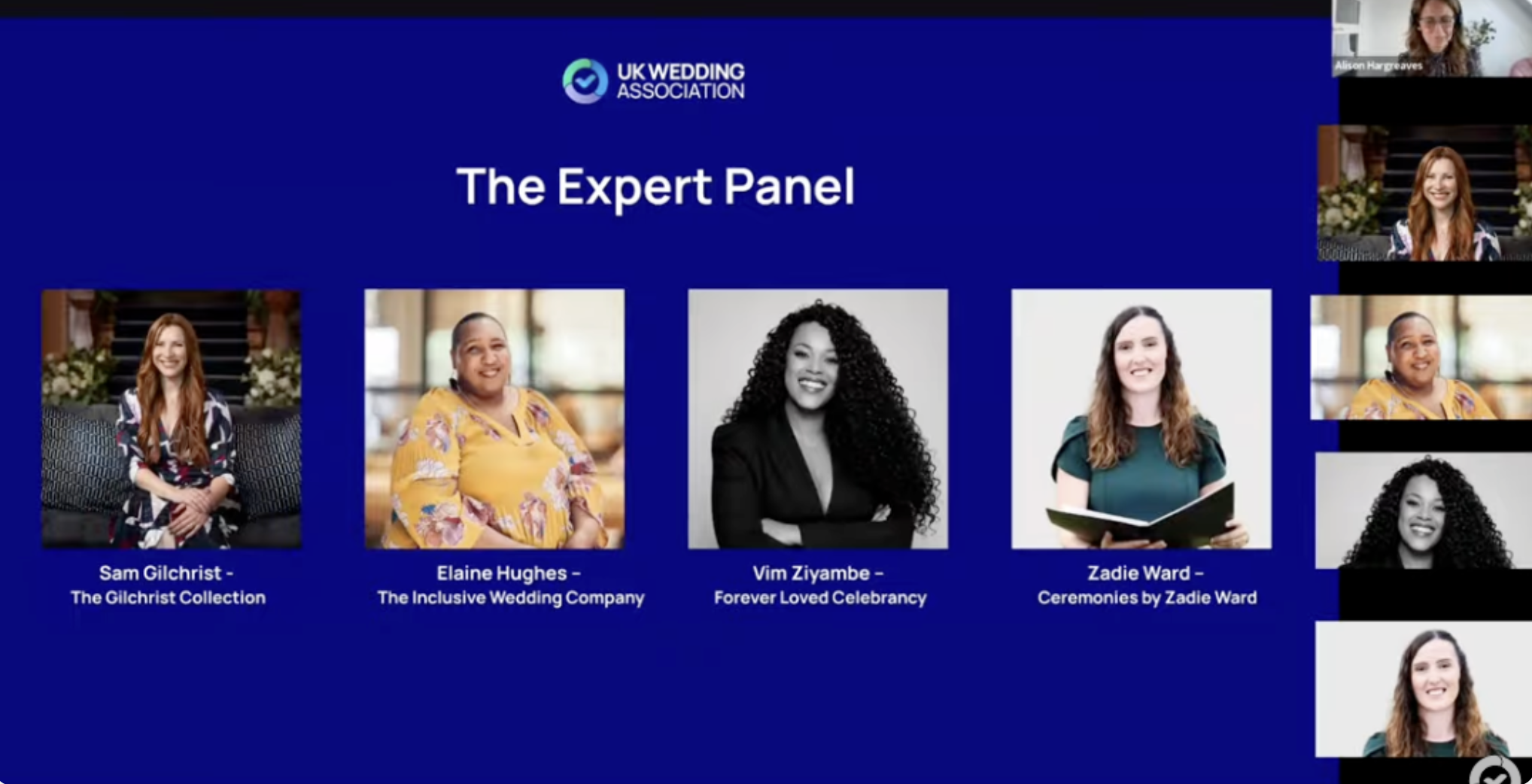
Screenshot from UKWA wedding law reform webinar
And I think having those different voices in the room really mattered. Because it's very easy for each part of the wedding industry to look at reform through the lens of “what does this mean for my business?” Celebrants could focus on whether we'll be able to legally marry couples. Venues could worry about what happens if couples no longer need licensed premises.
But while we might all come at this from different angles, there should be one thing we have in common: we're here to serve couples. I spend a huge amount of time listening to couples talk about what they actually want from their wedding, the things they don't realise they're allowed to question and the compromises they make because they assume “that's just how weddings work.” So for me, reform shouldn't be about creating the best outcome for celebrants, venues or any other part of the industry. We're not the ones getting married.
If this reform is genuinely going to modernise weddings for the next generation, I think we need to ask a much bigger question:
What will actually create the best system for couples?
That means thinking about choice, yes, but also accessibility, safeguarding, professional standards and making sure the people taking responsibility for legally marrying couples are properly trained and supported. More choice is only a good thing if couples can trust the choices they're being given.
My biggest message to other wedding professionals has been simple: please actually respond to the consultation. Don't assume someone else in the industry will do it, and don't only answer the questions that directly affect your own business.
We've spent years saying wedding law needs to change. Now we've actually been asked what we think. We need to make sure the answer we give keeps couples at the centre of it.
Talking weddings, business and Marriage Law Reform on Becca Pountney’s award-winning podcast
Marriage Law Reform also came up when I recently joined wedding business mentor Becca Pountney on her podcast, Wedding Pros Who Are Ready to Grow, alongside a much wider conversation about my journey building Ceremonies by Zadie and what I've learnt along the way.
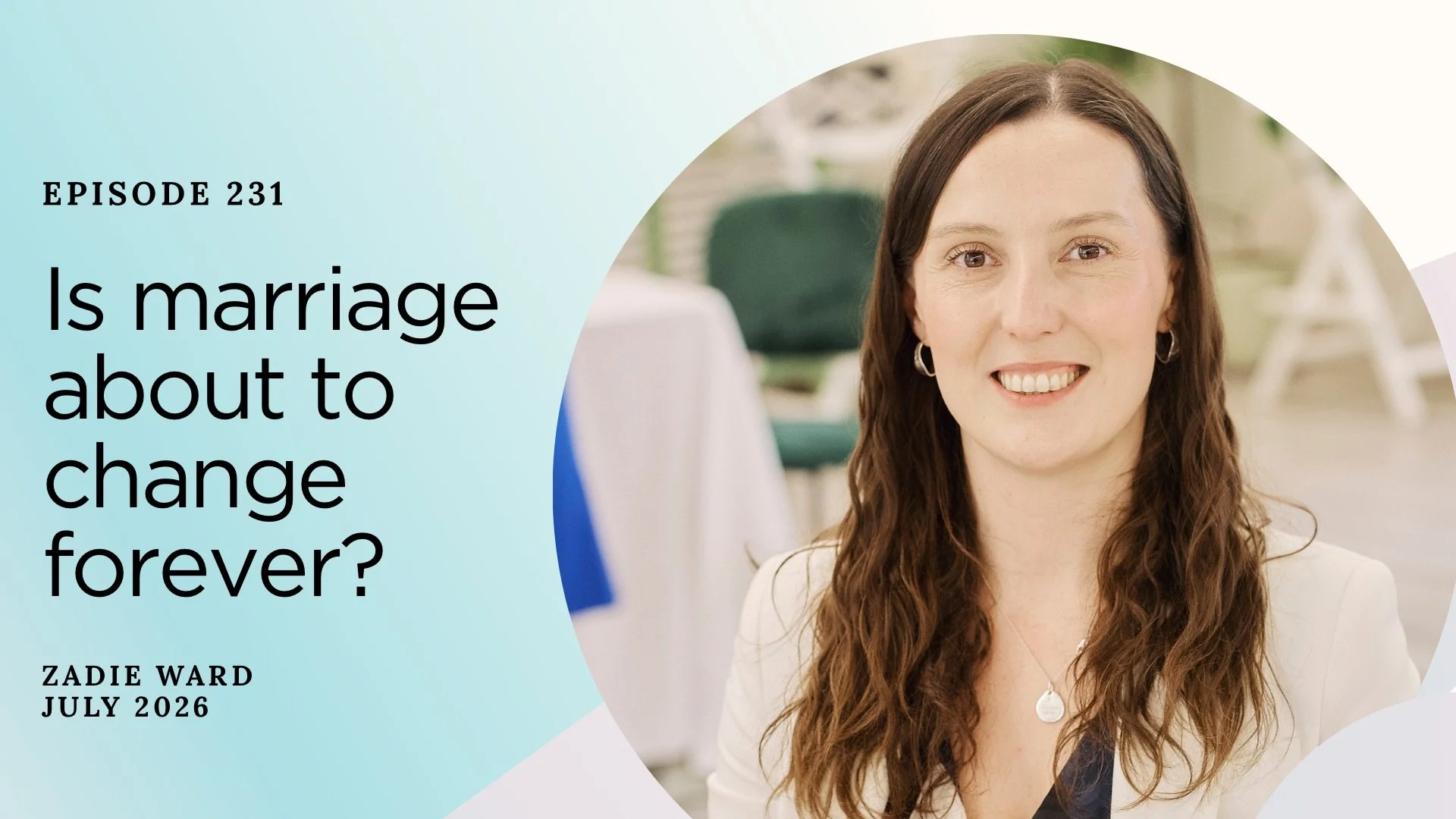
Screenshot promo card for Zadie’s episode on Becca Pountney’s award-winning podcast
And learning was actually a pretty big theme. I've invested a LOT of time in learning since becoming a celebrant. About ceremonies, storytelling, weddings, guest experience, relationships and all the many moving parts that go into creating an incredible wedding day.
Partly because I'm naturally curious (and apparently incapable of leaving a rabbit hole unexplored!), but mostly because I want to continue to be really bloody good at what I do.
My couples shouldn't need to understand the ins and outs of wedding law or spend hours researching every ceremony option available to them. That's part of my job. I want to understand this stuff well enough that I can explain what actually matters, show them options they didn't know they had and help them make informed choices about their ceremony.
But one of the biggest lessons I've learnt while growing my business is that learning more doesn't automatically make you better. At some point, you have to actually do something with what you've learnt. Not exactly rocket science, but procrastination is a very real thing!
And strangely, that feels pretty relevant to Marriage Law Reform too. We've spent years talking about wedding laws being outdated. The Law Commission has reviewed the system and people across the wedding industry have campaigned for change. Now we actually have an opportunity to do something about it.
Which brings me to probably the most important part of this whole blog: having your say.
How to have your say on the Marriage Law Reform consultation and the future of weddings
So, after all that, here's the bit where you come in!
The Government's Marriage Law Reform consultation is open until 24 September 2026, and you absolutely do not need to be a celebrant, lawyer or wedding industry expert to have an opinion on it and respond. If you're planning a wedding, have recently got married or simply care about the choices couples should have in the future, they want to hear from you.
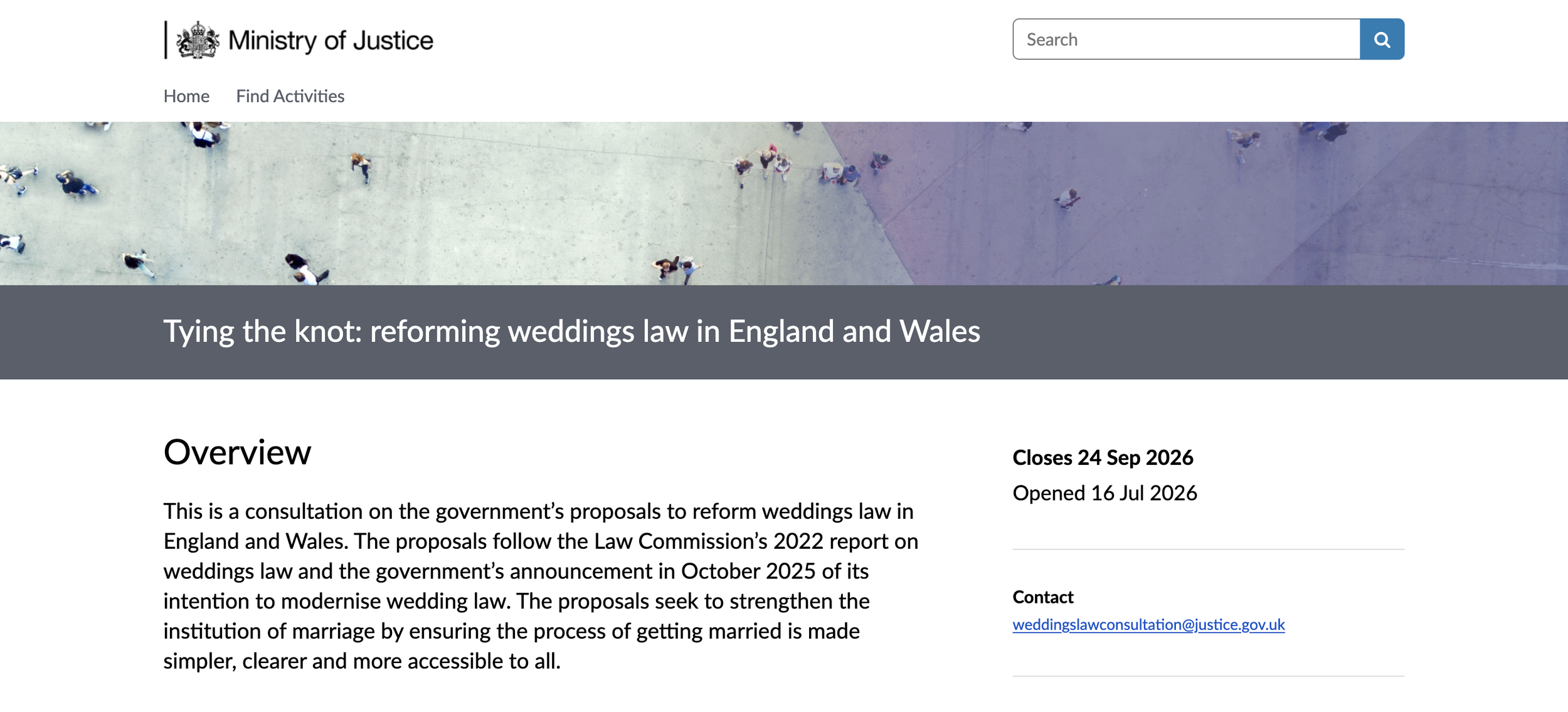
Government’s consultation survey webpage
And if you work in the wedding industry, we spend our working lives hearing what couples want, what frustrates them and where the current system gets in their way. This is our opportunity to actually do something useful with that knowledge to help shape a system that actually works for them.
You can read the full proposals before responding, but please don't be scared off by the rather hefty consultation document! The online questionnaire talks you through the areas the Government wants feedback on, question by question. You don't have to answer every question, and you can simply respond to the parts you have knowledge or experience of.
And importantly, you don't have to agree with me. I'm not trying to send an army of people to the consultation to give the “right” answers. I want the Government to hear from the people these changes will actually affect, so whatever you genuinely think, tell them.
If you've ever found yourself saying “wait, why can't we do that at our wedding?”, wished you'd had different options when you got married, or worked with couples and regularly seen the limitations of the current system, this is your chance to have a say in what comes next.
The consultation closes on 24 September 2026, so please don't leave this one sitting in an open tab until the day before. (Yes, I'm speaking to myself there too.)
It might feel like just another online form, but this is the biggest proposed overhaul of wedding law in England and Wales for generations. If we want the new system to reflect the people actually getting married, those people need to be part of the conversation.
So, if you want the future of weddings to better reflect the people actually getting married, this is your chance - go do it!
Marriage Law Reform FAQs
-
It depends where in the UK you're getting married. In England and Wales, Humanist and independent celebrants cannot currently conduct a legally binding marriage, so couples need to complete the legal marriage separately. Humanist celebrants can conduct legal marriages in Scotland and Northern Ireland, where Humanist marriages are already legally recognised.
The rules are different again for independent celebrants, so if you're planning a wedding outside England or Wales, always check the specific legal requirements where you're getting married.
-
There is no confirmed date yet. The consultation closes on 24 September 2026, and any changes would then need to go through the legislative process before a new system could be introduced. Based on the potential timeline discussed during the UK Wedding Association industry briefing, 2029 is a reasonable earliest estimate for implementation, but this is not a confirmed Government date and it could take longer.
So if you're currently planning your wedding, don't make any bookings on the assumption that the law will have changed by your wedding date. And I definitely wouldn't postpone your wedding until 2029 purely in the hope that the new law will be in place by then, as there are no guarantees.
-
No. Even if the reforms become law, they wouldn't automatically give every wedding celebrant the legal power to marry couples. Officiants would need to meet specific requirements and be properly authorised and regulated.
For Humanist celebrants, the proposed system would allow qualifying non-religious belief organisations, such as Humanists UK, to nominate suitably qualified celebrants to conduct legal marriages.
The Government is also proposing a route for independent celebrants, but exactly how their training, authorisation and ongoing regulation would work is still under consultation.
-
That's the Government's committed direction of reform, yes. The reforms are intended to enable non-religious belief organisations, including Humanists, to conduct legally binding weddings in England and Wales for the first time, bringing us closer into line with Scotland and Northern Ireland, where Humanist marriages are already legally recognised.
The exact framework for how organisations nominate and oversee their officiants is part of what's being worked through, though, and the law hasn't changed yet. So if you're planning a Humanist wedding in England or Wales now, you still need to arrange your legal marriage separately under the current law.
-
Currently, you can legally marry outdoors in England and Wales in certain circumstances, including approved outdoor areas at licensed premises. The proposed reforms could give couples much more freedom by moving away from a system based largely on approved premises. An authorised officiant would instead take responsibility for ensuring the location meets the legal requirements.
That could open up possibilities such as private gardens and other outdoor locations that currently couldn't host a legal civil wedding. There would still be rules around the suitability and dignity of the location, so it wouldn't mean absolutely anywhere goes.
-
Potentially yes, but not to get married there. Under the proposed reforms, couples would still need to complete the legal preliminaries (giving notice) before getting married. The proposals include a two-stage notice process, beginning online and followed by an in-person interview. So reform wouldn't remove the important checks designed to establish that a couple can legally and freely marry. This safeguard would still be in place.
But if you're asking whether you'd still need a separate register office wedding before your celebrant ceremony, that's the exciting bit. If the reforms eventually allow your chosen authorised officiant to conduct your legal marriage, you could have one ceremony that is both personal and legally binding instead of two.
-
No. This is probably the most important FAQ because some of the headlines make it sound like celebrant weddings have already become legal in England and Wales, or that it’s certain they will do. They haven't.
The Government has committed to legally recognising Humanist marriages as part of its wider reforms, while other parts of the proposed system are still being consulted on. But none of these changes are in force yet.
Until new legislation is passed and implemented, the existing marriage law continues to apply. So if you're planning your wedding now, work with the law as it currently stands, not on the assumption that the new system will be in place by your wedding date.
-
Absolutely. You don't need to wait for Marriage Law Reform to have a celebrant wedding. Couples are already having completely personal celebrant ceremonies across England and Wales. Under the current law, you simply complete the legal marriage separately.
If the law changes before your wedding, what that means for your ceremony will depend on the final legislation, when it comes into force and whether your celebrant becomes legally authorised.
So my advice is to book the celebrant you actually want based on the options available now, rather than trying to predict what the law might look like in a few years.
Planning a celebrant wedding now?
If all of this has got you excited about what weddings could look like in the future, here's the good news: you don't need to wait for the law to change to have a ceremony that feels completely like you.
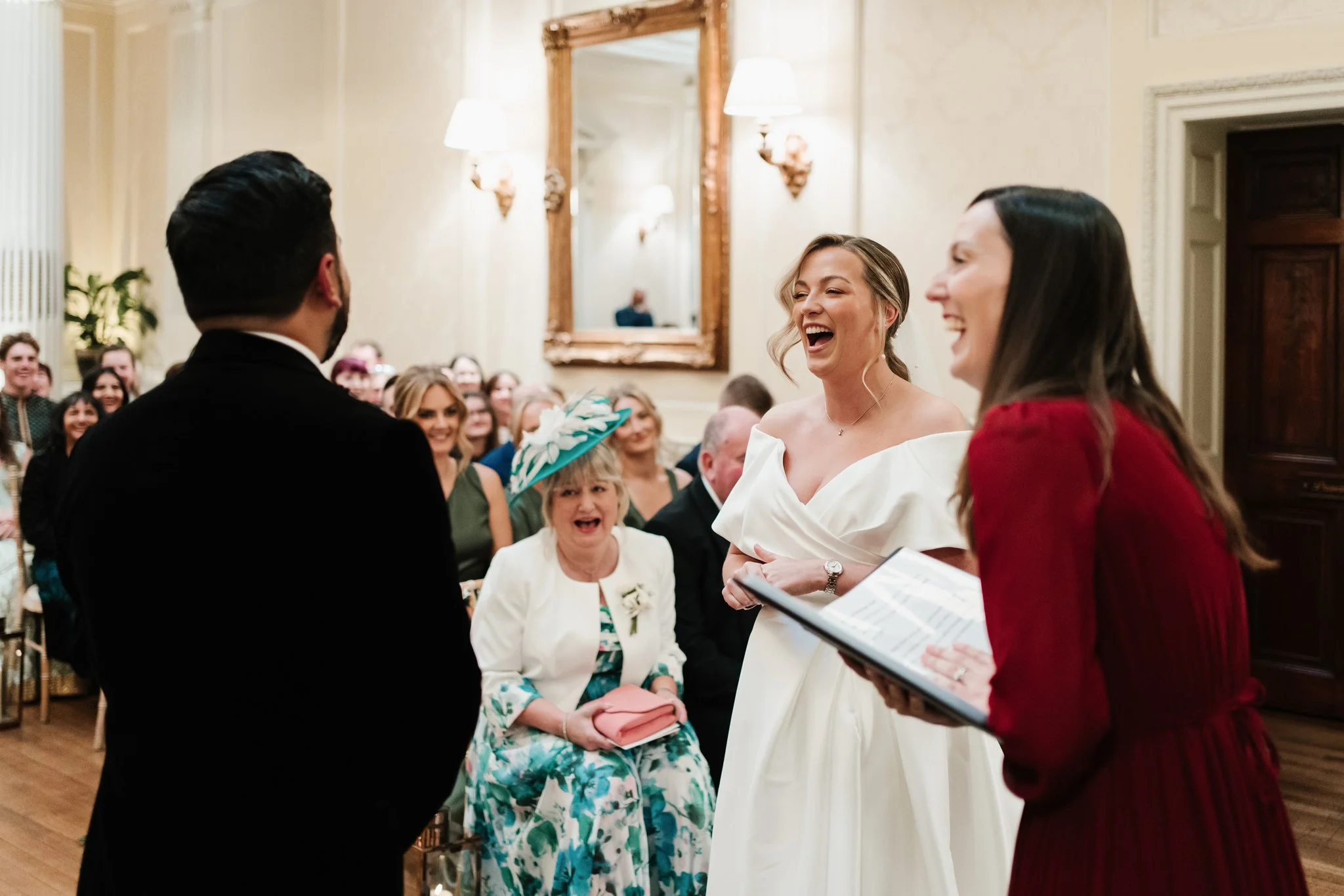
Photo courtesy of Georgi Mabee Photography
Couples are already choosing celebrant ceremonies because they want more freedom over what happens on their wedding day. You can choose where you have it, write completely personal vows, involve your favourite people, throw out traditions that mean nothing to you and keep the ones that do, and have your story told by someone you've built a genuine relationship with.
The only difference, for now, is that the legal marriage needs to happen separately.
And as I mentioned earlier, plenty of my couples are completely happy with that. They do the legal formalities separately and save the vows, rings, stories and celebration for the ceremony they actually consider their wedding.
So please don't put the wedding you want on hold waiting for Marriage Law Reform. We don't know exactly what the final law will look like or when it will come into force. What we do know is how much choice you already have.
If you're still trying to work out which type of ceremony is right for you, start with my Celebrant vs Registrar: What's the Difference? guide below. I've broken down the options so you can make the choice that works for the two of you.
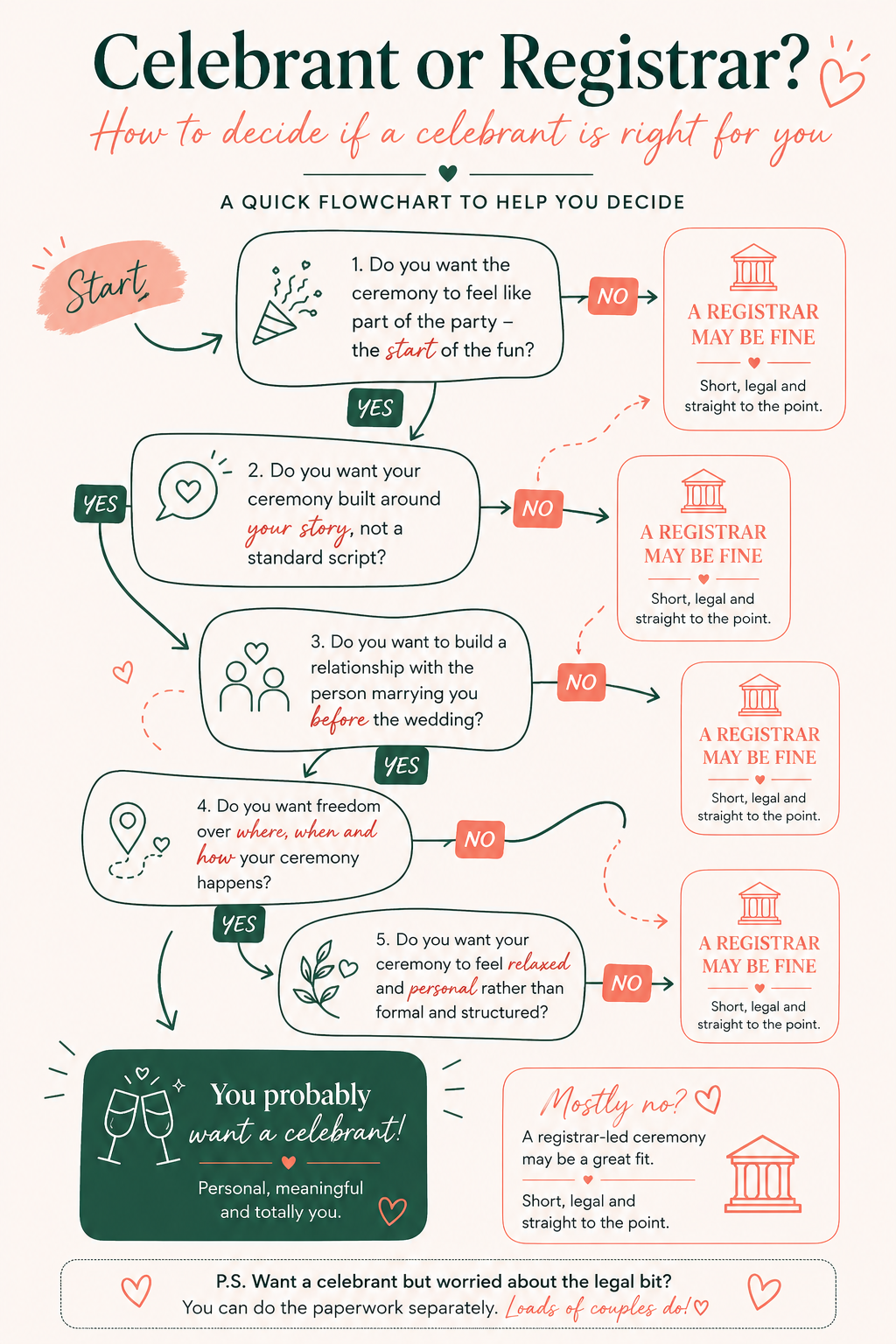
And if you're reading all of this thinking, “Yep, a completely personal ceremony sounds much more like us”, then come and have a look at my wedding celebrant services and let's see what we could create for your day.
About Zadie
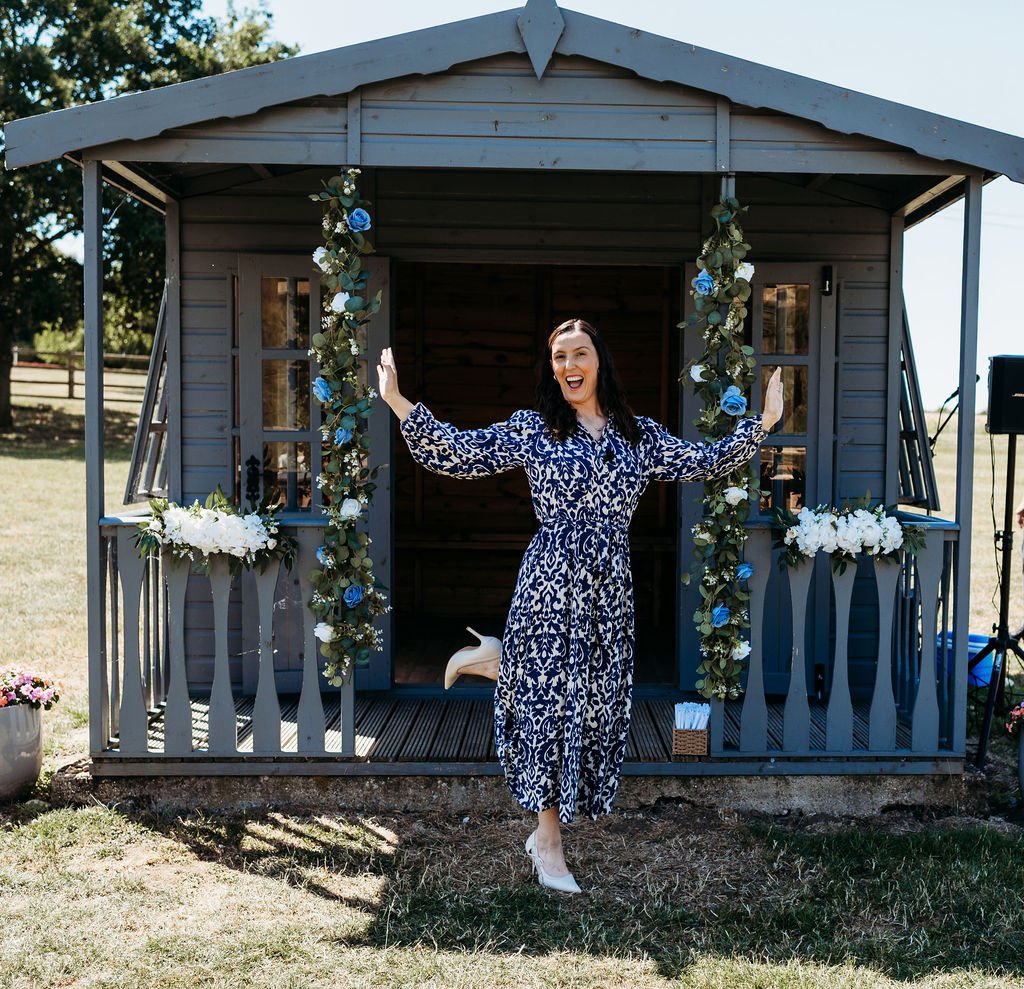
Photo courtesy of Sarah J Scott Photography
Hi, I'm Zadie, a UK wedding celebrant and the person behind Ceremonies by Zadie. I create fun, modern and completely personal wedding ceremonies for couples who want their ceremony to feel like one of the best parts of their wedding day, not just the bit everyone sits through before the drinks!
I'm trained by Humanists UK, but more importantly, I'm a huge believer in couples understanding all the choices available to them and creating a wedding that actually makes sense for them. That's a big part of why I've been campaigning for Marriage Law Reform, contributing to the conversation with BBC News and the UK Wedding Association, and keeping very close tabs on what happens next.
Because when a couple trusts me with their wedding ceremony, I don't take that lightly. My job isn't just to turn up on the day and read a nice script. It's to get to know you properly, help you work out what you actually want, bring ideas you might never have considered and create a ceremony that has your guests laughing, crying and thinking, “That was SO them.”
If that sounds like the kind of wedding ceremony you're looking for, I'd love to hear what you're planning.